Cognitive Extension
Explore how the Center frames AI not as a shortcut around learning, but as a disciplined way to extend human thinking. This tour highlights the public structure of the Cognitive Extension section and previews the developmental pathway available to members.
Discover Cognitive Extension
What if AI in education were not mainly about shortcuts, automation, or convenience, but about helping learners think better?
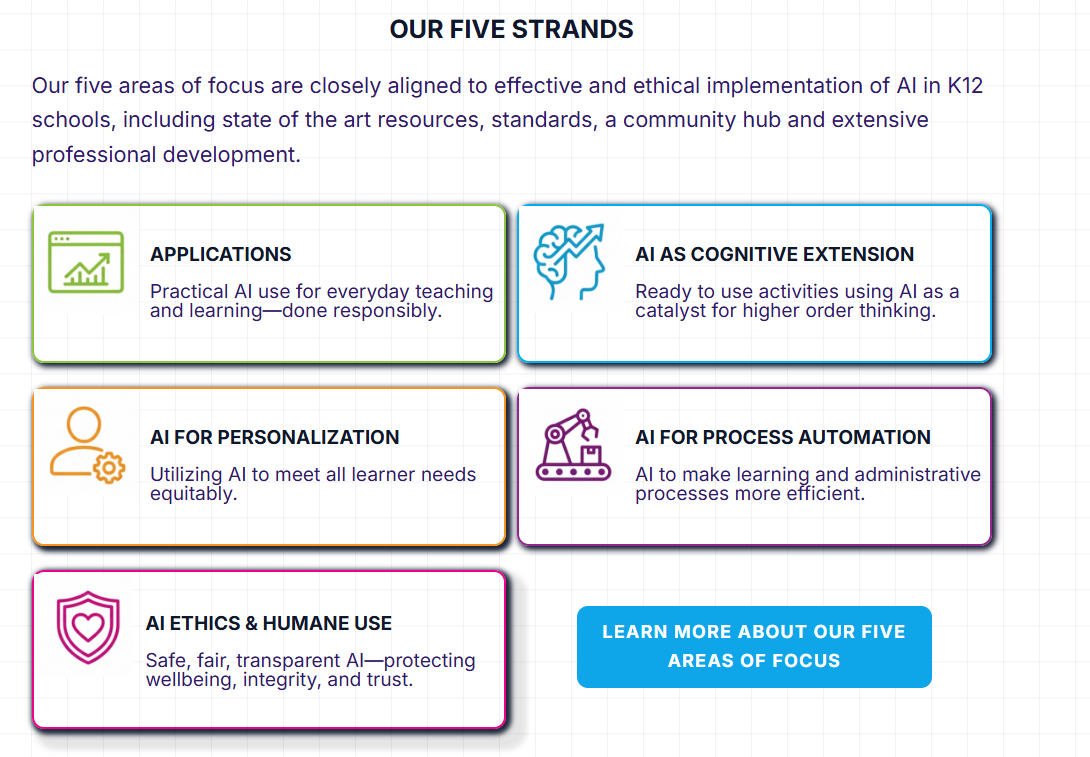
At the Center for AI in Education, Cognitive Extension is one of the core strands of the work. It is built around a simple but powerful idea: AI should not replace human thinking. It should help extend it.
This section of the Center introduces a practical library of activities designed to help students use AI to deepen reasoning, strengthen inquiry, organize ideas, explore alternatives, and support more thoughtful learning.
A library designed for real classrooms
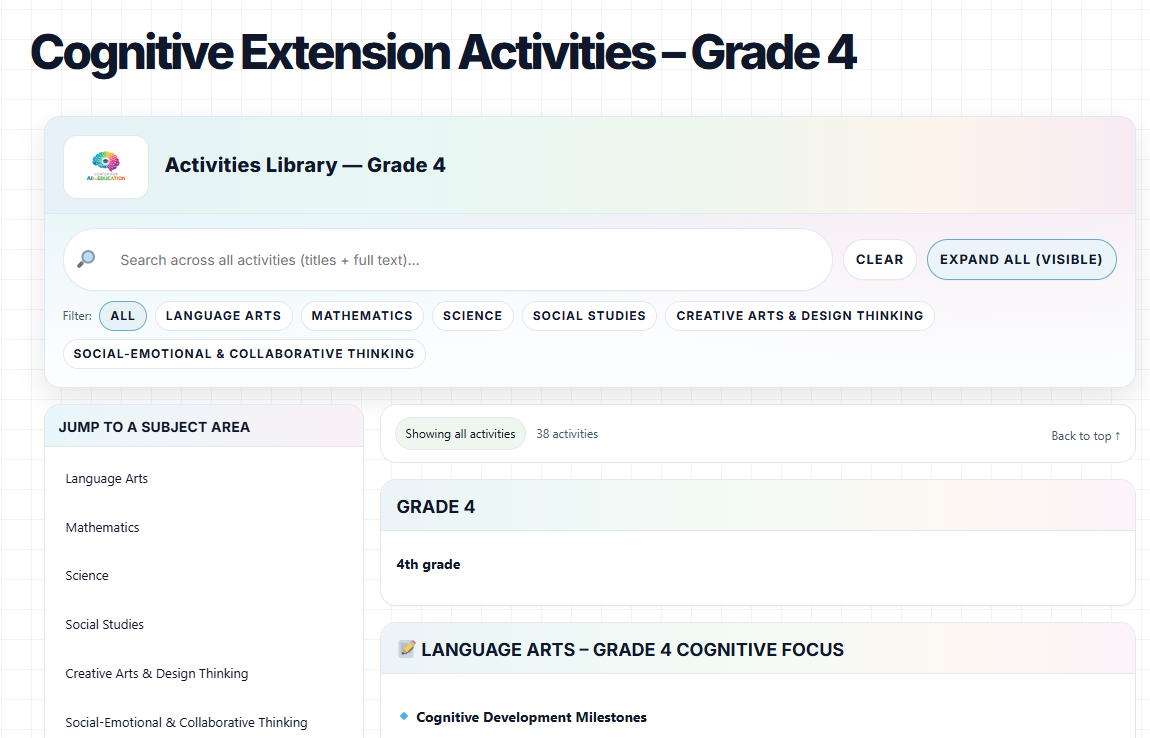
Cognitive Extension is not presented as an abstract theory. It is organized as a practical activity library that educators can explore by school stage and grade level.
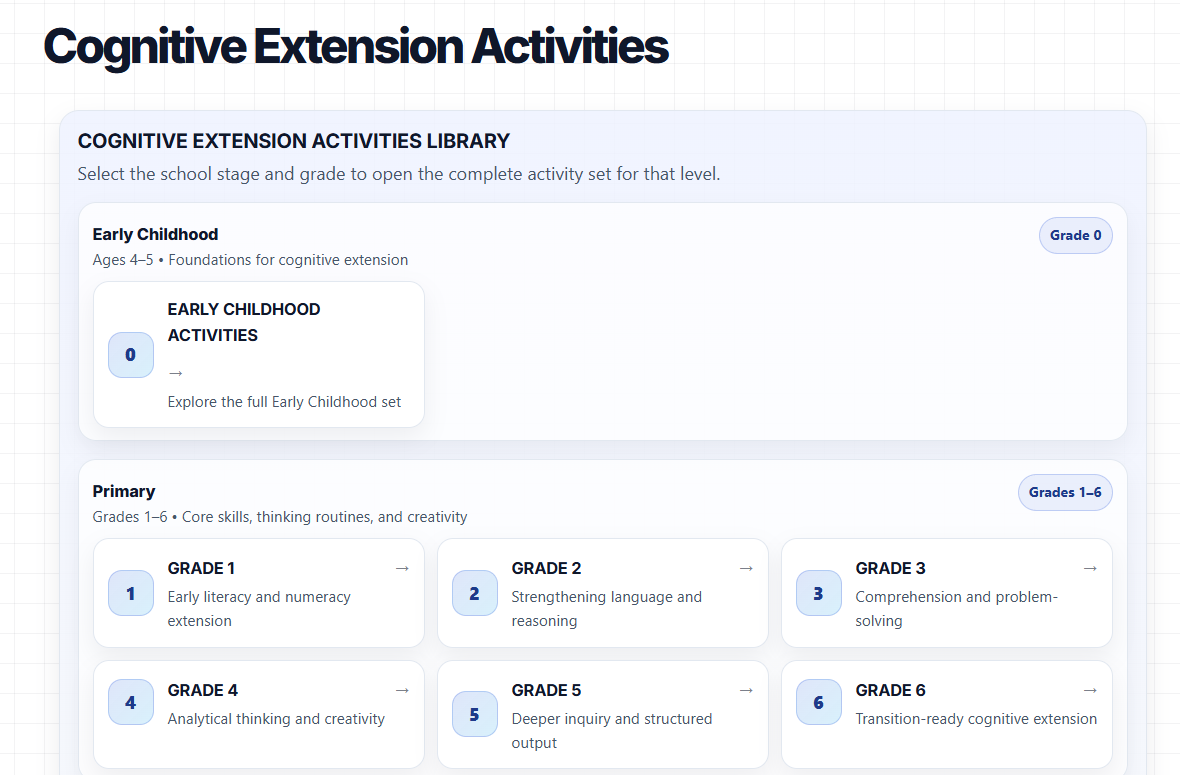
The public menu invites visitors to select the school stage and grade in order to open the complete activity set for that level. This immediately signals that the section is built for real implementation: structured, developmental, and easy to navigate.
Rather than offering one generic set of AI activities, the Center has created a pathway that respects how learners grow.
A developmental progression from Early Childhood to Grade 12
One of the strongest features of the section is its developmental design.
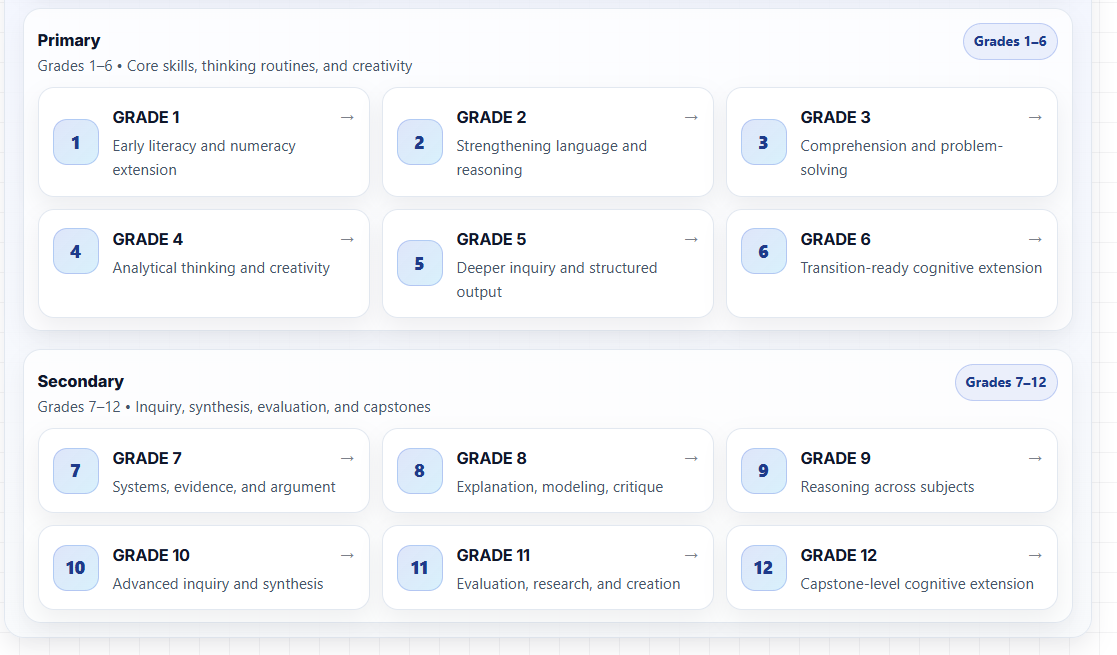
The library is organized into three major stages:
This progression makes clear that the Center does not treat AI use as one-size-fits-all. Instead, it frames cognitive extension as something that evolves with age, maturity, and intellectual demand.
From early reasoning to capstone-level thinking
The grade-by-grade descriptors give a strong sense of how the Center imagines growth over time.
In the earlier grades, the emphasis is on literacy, numeracy, language, reasoning, and problem-solving. As students move forward, the focus shifts toward analytical thinking, creativity, deeper inquiry, structured output, evidence, argument, critique, synthesis, research, and creation.
By Grade 12, the section reaches capstone-level cognitive extension. This gives the entire library coherence. It is not simply a collection of activities. It is a progression of increasingly sophisticated ways of thinking with AI.
A structured pathway into member content
The public menu shows the architecture of the Cognitive Extension library, but the individual activity sets themselves are part of the Center’s member content.
When visitors click into grade-level pages, they are redirected to the Center’s secure sign-in area. That sign-in page reinforces the wider value of membership by pointing to the broader ecosystem of resources available inside the Center, including standards and policies, searchable resources, decision tools, and community collaboration.
In other words, Cognitive Extension is not a standalone feature. It is part of a larger professional ecosystem designed to help schools implement AI with depth, clarity, and coherence.